
EQ for ESQ™ Self-Assessment + Personalized Report
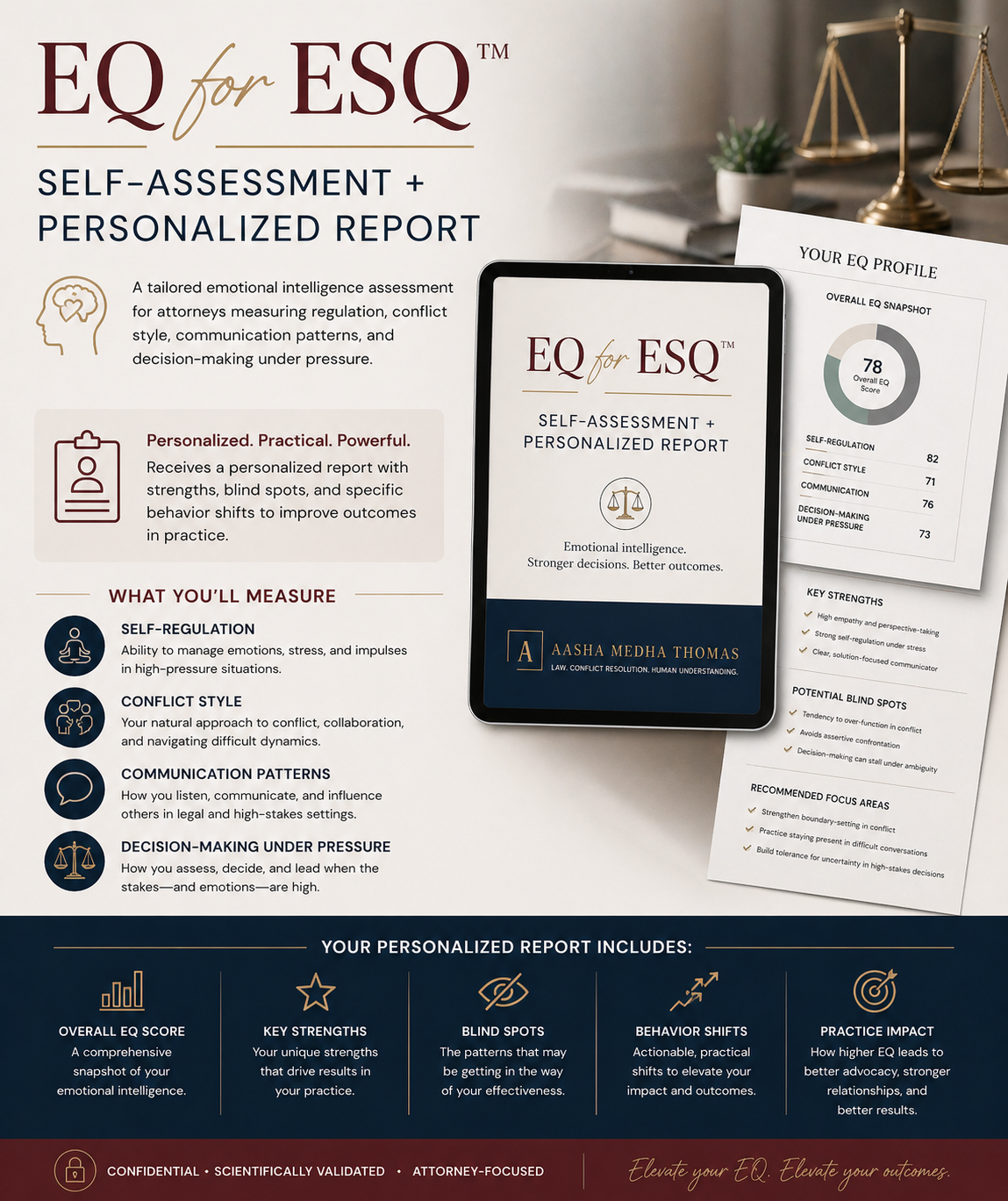
A tailored emotional intelligence assessment for attorneys measuring regulation, conflict style, communication patterns, and decision-making under pressure.
👉 Delivers a personalized report with strengths, blind spots, and specific behavior shifts to improve outcomes in practice.
A tailored emotional intelligence assessment for attorneys
Instructions:
Rate each statement from 1–5
1 = Strongly Disagree
5 = Strongly Agree
________________________________________
🔹 SECTION 1: SELF-REGULATION (Emotional Control Under Pressure)
1. I remain calm when opposing counsel becomes aggressive.
2. I am aware of my emotional triggers during conflict.
3. I can pause before reacting, even under pressure.
4. I regulate my tone and body language intentionally.
5. I recover quickly after emotionally charged interactions.
________________________________________
🔹 SECTION 2: CONFLICT STYLE (Approach to Conflict)
6. I adapt my conflict approach based on the personalities involved.
7. I recognize when a situation requires collaboration vs. firmness.
8. I avoid escalating conflict unnecessarily.
9. I can identify when a client is contributing to the conflict dynamic.
10. I shift strategy when a current approach is not working.
________________________________________
🔹 SECTION 3: COMMUNICATION PATTERNS
11. I actively listen without preparing my response while others speak.
12. I can reframe difficult conversations to reduce defensiveness.
13. I tailor my communication style to the audience (judge, client, OC).
14. I recognize when communication breakdowns are emotional, not logical.
15. I ask questions that move conversations forward rather than entrench positions.
________________________________________
🔹 SECTION 4: DECISION-MAKING UNDER PRESSURE
16. I make decisions based on strategy, not emotional reactivity.
17. I can distinguish between urgency and importance.
18. I maintain clarity even when stakes and emotions are high.
19. I recognize when my judgment may be influenced by stress or bias.
20. I can guide clients toward sound decisions despite emotional resistance.
________________________________________
📊 SCORING
● Add each section separately (5–25 per section)
● Total score range: 20–100
Score Interpretation (per section):
● 21–25: High EQ competency
● 16–20: Functional but inconsistent
● 11–15: Needs development
● 5–10: Likely impacting outcomes
________________________________________
📘 PERSONALIZED REPORT TEMPLATE
(This is what I deliver after they complete it)
________________________________________
🧠 EQ Profile Snapshot
Overall Score: ___ / 100
● Self-Regulation: ___ / 25
● Conflict Style: ___ / 25
● Communication: ___ / 25
● Decision-Making: ___ / 25
________________________________________
✨ Key Strengths
(Auto-fill based on highest section scores)
Example:
● Strong emotional regulation under pressure
● Ability to adapt conflict strategy across personalities
● Clear, audience-aware communication
________________________________________
⚠️ Potential Blind Spots
(Based on lowest scoring sections)
Example:
● Reactivity under high-stakes stress
● Over-reliance on positional advocacy
● Missing emotional drivers in client behavior
________________________________________
🔄 Behavior Shifts (Actionable)
If Self-Regulation is low:
● Implement a pause protocol before responding in conflict
● Track emotional triggers in high-conflict cases
If Conflict Style is low:
● Identify whether conflict is ego-driven, fear-driven, or strategic
● Shift from control to influence strategies
If Communication is low:
● Use reframing language (“What I’m hearing is…”)
● Ask forward-moving questions instead of reactive responses
If Decision-Making is low:
● Separate legal analysis from emotional pressure
● Use structured decision frameworks with clients
________________________________________
🎯 Practice Impact
● Improved negotiation outcomes
● Reduced escalation in high-conflict cases
● Stronger client trust and compliance
● More efficient case resolution
________________________________________
🧠 Closing Line
Emotional intelligence is not a soft skill in law — it is a strategic advantage.